Is The Made In U.S. Trend Really Happening?
Is the Made in U.S. trend really happening or are we just too hopeful? Interviews with ThirdLove, imogene + willie and SVILU.
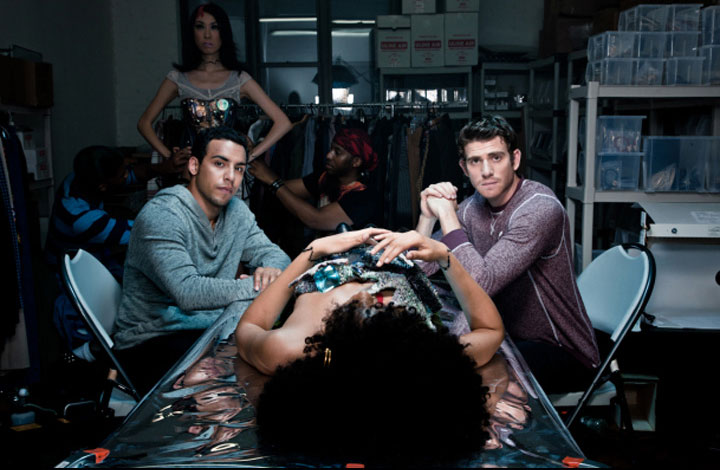
In 2010, we fell in love with the charming Brooklyn boys, Ben Epstein and Cam Calderon of Crisp, as they journeyed their way through the concrete jungle of Manhattan to locally produce their clothing line in the short but sweet HBO TV series “How To Make It In America.” Between the serendipitous late-night dinner parties with John Varvatos and shifty manufacturing contracts to hold on to their label rights, the lovable boys overcame and, yes, ended up “making it.”
At the same time the show aired, the seeds for a domestic manufacturing resurgence was sprouting, not just in TV scripts, but in reality — with about 50,000 manufacturing jobs brought back to America in 2010 according to the Reshoring Initiative.
Yet, for fashion companies interested in producing domestically, the story doesn’t always encapsulate the lighthearted finale many watched on TV.
Overall, the increase in American manufacturing was a slight rise compared to the loss of 6 million (33%) manufacturing jobs in just the 2000s alone, according to the Bureau of Labor Statistics. Even more stunning? The fact that we’ve lost 80 per cent of the sector.
The value-based appeal to produce in America is evident for companies. In a recent study by the Boston Consulting Group of 5,000 shoppers, customers are willing to pay up to 60 per cent more for American made goods. Other incentives like substantially shorter shipping times, and the ability to oversee quality production are directly inline with efficiency. But the lack of manufacturing infrastructure is hindering companies ability to execute the demand.
In maneuvering their way to successful production runs, companies are facing problems beyond values, convenience, or even the slight difference in price cost between domestic and overseas.
“It wasn’t that long ago [the 1970s], all bras were made in the US. Since then, all the components that go into making a bra have been lost to China,” explains San Francisco-based Heidi Zak, co-founder of the luxury lingerie and social enterprise brand, ThirdLove.

“Today, it’s all cups in bras — not one company is making them in the U.S. Gel wiring, and those types of machines and innovations, are coming from Asia. If you want to be on the forefront of producing the latest and greatest, Asia is were it happens,” adds Zak.
ThirdLove, is part of the wave of social entrepreneurs rising up to break the mold of traditional commerce. Along side of the brand’s quality lingerie, no-middleman business approach and inclusion of bra half-sizes, they’ve created a smartphone app tied to their e-commerce. In just two pictures women can correctly size themselves for bras in the comfort of their home. But ThirdLove, like hundreds of other fashion companies, have come up against major domestic infrastructure blocks where specialty production is only viable overseas. Due to lack of high quality and affordable manufacturing, the company had no choice but to produce in two off-shore locations: Asia and the Southern Hemisphere.
“Over all there is more of a focus in terms of made in America and more of a resurgence, but lingerie is one of the most difficult, and domestic production just is not an option” says Zak.
America fell behind as manufacturing followed low labor costs overseas. And now a decade later, the momentum of onshore technological advances has disappeared with it.
Recent CFDA Lexus Eco Fashion Challenge runners up, Britt Cosgrove and Marina Polo of SVILU, have found themselves in a similar lack-of-infrastructure conundrum, as ThirdLove, just in a different production arena. “There are certain categories of clothing that are not easy to produce domestically. For example, almost all knitwear has moved overseas,” says SVILU co-founder Britt Cosgrove.
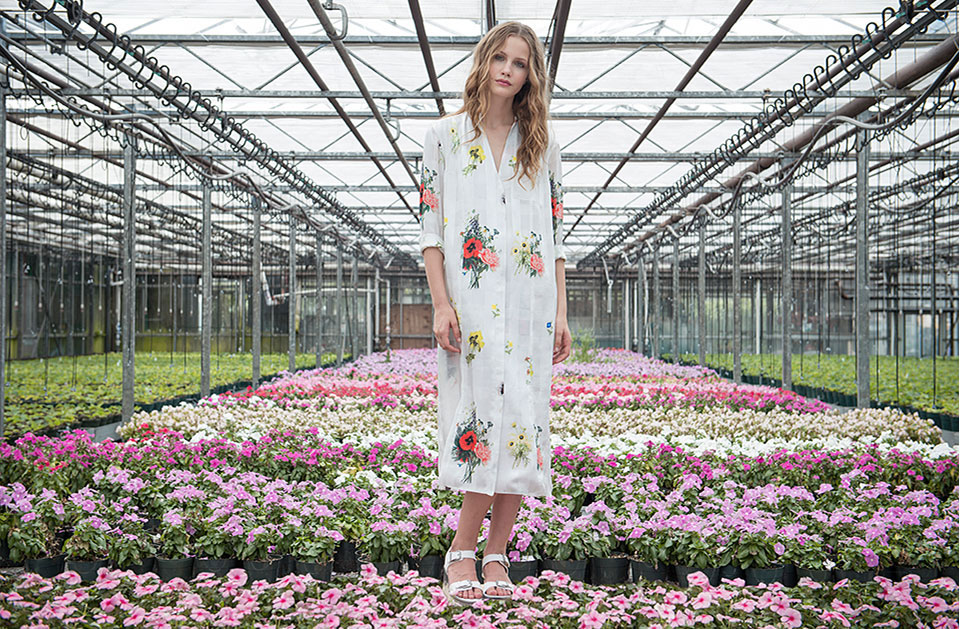 SVILU S/S 14
Half of SVILU’s line is produced down the street from their office, a natural decision when they launched their company. “[Local production] allows us to ensure that not only is the quality of our product impeccable, but that the conditions in which our clothes are being produced is up to standard and workers are being treated fairly,” says Cosgrove.
But the brand isn’t able execute the same standards for all their garments, simply because the option just isn’t available. As a result, they’ve had to split production — half domestically and half overseas — to balance company values and work force availability.
“All of our woven garments are made in NYC’s garment district and our sweaters are made in China, says Cosgrove. “As the movement towards local production gains momentum it is our hope that these industries will return.”
While many are optimistic that the domestic manufacturing trend will continue to rise steadily, it is a rarity for a company to take action.
“Let’s not blame American apparel companies for taking their work overseas,” says Matt Eddmenson, co-founder of all-American manufactured brand, Imogene + Willie, “the reality is they have to.”
Matt along with co-founder and wife Carrie Eddmenson, are using the infrastructure gap as fuel to rebuild. In their recent TED talk, “The Demise of American Production is Killing Our Dream,” they share the story of how Carrie’s family business dove from producing 250,000 jeans a week in the late eighties, to 500 jeans a week in the 2000s. They watched the rise and tumble of the family denim business fall into a distant memory.
Now, Carrie and Matt, are passionately embarking on a mission to bring manufacturing back to America, first with their own label and then at a larger scale.
Imogene + Willie production began out of a run-down gas station they transformed into a charming headquarters in Nashville. They did everything in house — ran a retail store in the front of building, and cut and sew, fitting, production runs and shipping out of the back. As the company outgrew the space, they’ve expanded production within an hour outside of their headquarters.
The hope for Imogene + Willie rests in their unwavering dedication to produce all their clothing domestically, and, perhaps most importantly, in supporting other domestic makers around the country to keep their missions alive. They envision multi-tiered manufacturing facilities where skills and craft overlap. In the traditional model, one worker focuses a specific job, like sewing a t-shirt or cutting fabric for a jacket. Their vision is to see collaborative factories making on demand, no matter what the product. T-shirts one week, jeans the next, and dresses after that.
“We grew up in a thriving manufacturing business, and we slowly but surely, watched it go off shore. And then we, very painfully, watched my parents turn off the last lights (2008),” says Carrie. “Then we started all over, and we are trying it again.”
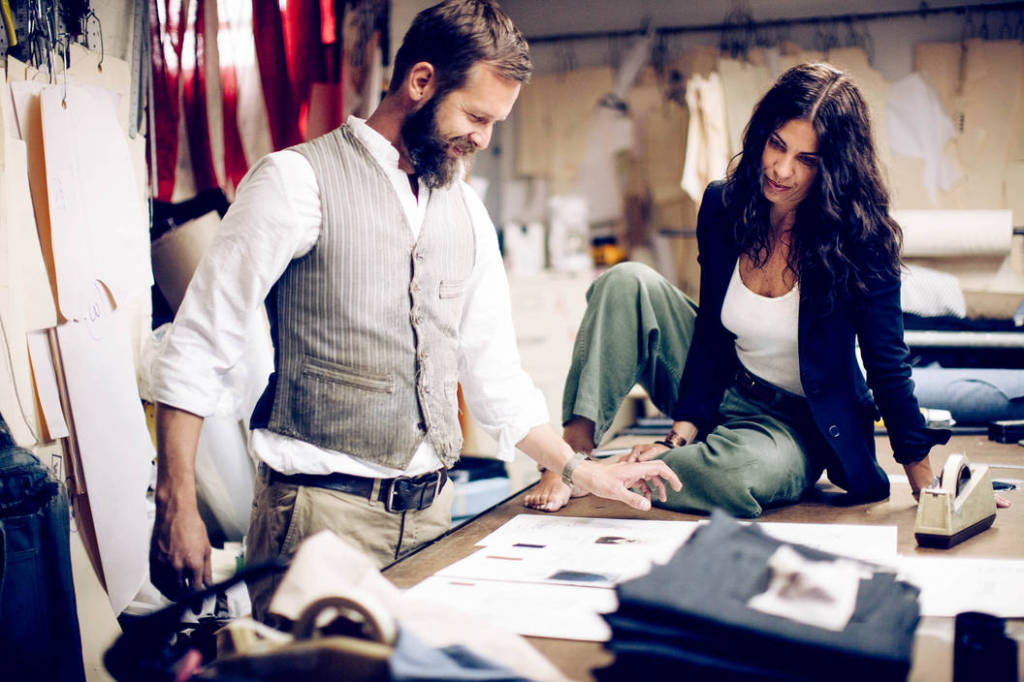
Imogen +Willie co-founders, Matt and wife Carrie Eddmenson
Designers like SVILU and Imogene + Willie are pioneers investing in the upkeep and growth of domestic manufacturing. But, overall, the resurgence to rebuild, specifically specialty and cutting-edge infrastructure within America, remains far behind until we can meet up with the technological advances overseas, which for the time being, have put our shores largely offline.
Image: Joseph Younis