Assumptions & The Power Of Choice: Looking At Women’s Rights Through Fashion
Anna Brones looks at “Assumptions & the Power of Choice: Looking at Women’s Rights Through Fashion.” Be careful about how you discriminate…
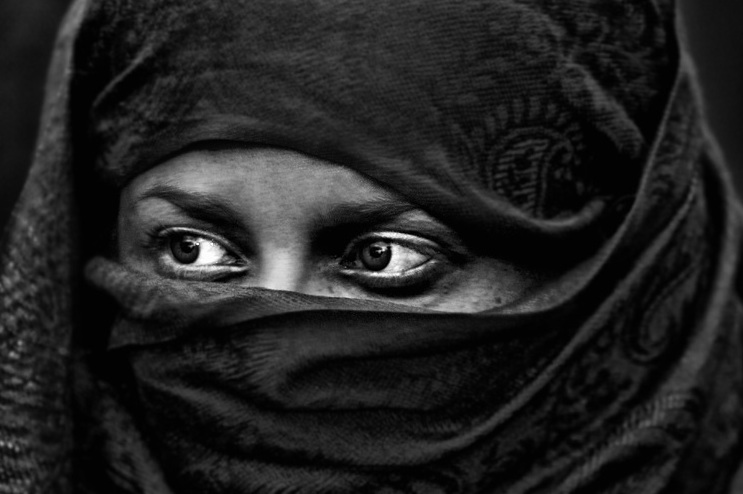
When it comes to the fashion industry, there’s no denying that sex sells, and it’s not just in advertising, it’s in the work place.
Don’t dress cute enough at the office and you’ll be considered boring -you may even make less money. Dress too sexy however, and, as New York Times columnist Maureen Dowd writes, your clothes might be “too distracting” for male colleagues and supervisors to bear.
Really?
As an American, or simply as a woman, how much choice do you feel you have when there’s always a very fine fashion line to walk?
“Appearing sexy is not necessarily a sign of empowerment. It is just as likely a sign of over-dependence on what men think of you - the opposite of empowerment; or a slavish copy of advertising images, again more dis-empowerment. Sexual freedom is not necessarily more empowering than restraint. All depends who makes the decision and for which reasons,” says Dr. Najwa Adra, a cultural anthropologist and development consultant.
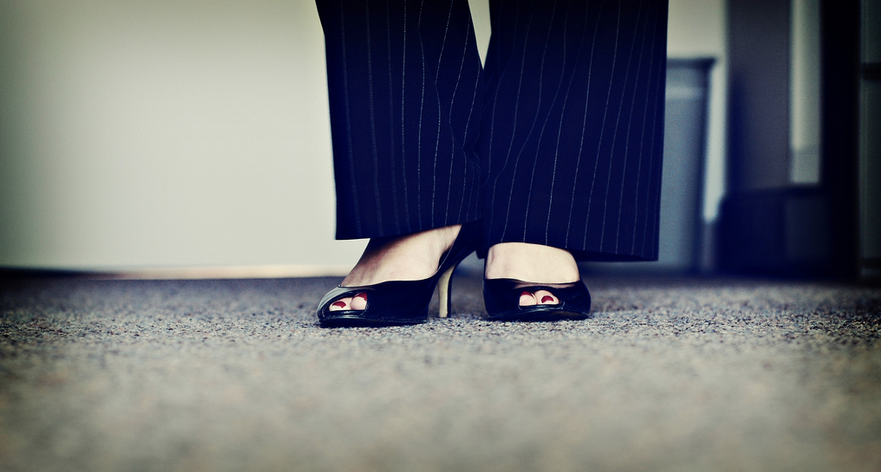
In the Western world we have embraced a kind of feminism that says “I can flaunt my body” forgetting that in doing so, we are just as much playing into the expectations of the patriarchy before us, and forgetting the fight in the process. We are body focused, and fashion is just another way that helps to perpetuate the problem.
I traveled to Afghanistan a few years ago, and I remember that the main response when I told people I was going to go was, “but you’re a woman, things are different over there.”
This was said out of love, but also trepidation. A fear of “The Other.”
Yes, women in many parts of the world don’t dress like we do. Some of them wear a veil. From afar, it can be easy to plug this into our own definitions of women’s empowerment and equality, and come to the conclusion that “other” women don’t have the same rights that we do, but there is so much that we don’t know or understand about the rest of the world, particularly when it comes to outward symbols like our clothing.
Recently the European Court of Human Rights upheld France’s veil ban, deciding that the law was not discriminatory. Human rights and women’s rights activists came out against the ban, reminding the rest of the world that it’s oppressive to force a woman to dress a certain way.
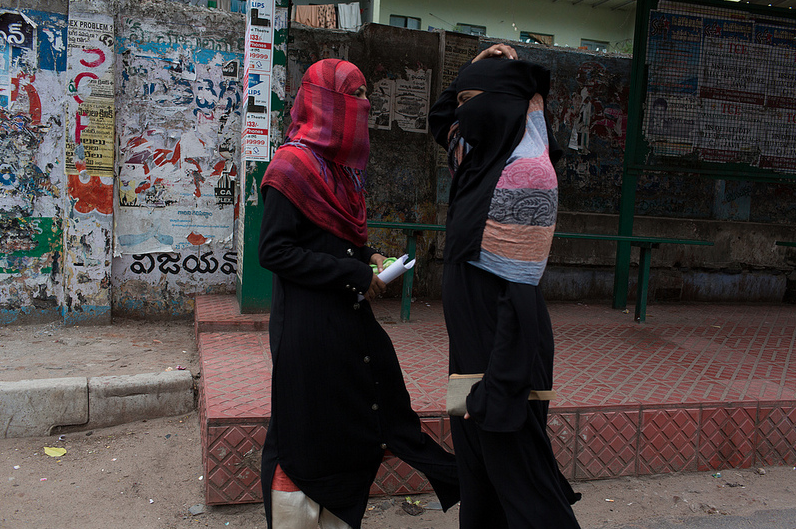
“The argument that the law protects women has no foundation,” Geneviève Garrigos, president of Amnesty International France told France24. “Many [Muslim] women wear veils of their own free will,” she said, adding: “The state does not exist to tell people how they should dress. Rather, it should allow them to make their own choices.”
But the decision also highlighted how much prejudice and assumption lies in judging how others dress. We use fashion, often incorrectly, as markers of modernity.
“Practically all the assumptions we make about Islamic women, particularly that they are forced to dress the way they do, are by definition wrong and misleading,” says Richard Peres, author of The Day Turkey Stood Still.
“Moreover, each country is different. Turkey is not Saudi Arabia nor is it Iran,” Peres adds.
Take for example the question of veils in Islamic culture.
While the Qur’an outlines guidelines for modesty, it does not require that Muslim women veil.
“Muslims are ignoring the basic teaching of the Qur’an about modesty that does not necessarily require a head cover. The affirmation of Khimar in the Qur’an {al Noor 24: 31} does not mean making it an obligation, rather it means being accepted by a society that has taken the practice before Islam,” Dr. Nimat Hafez Barazangi penned in her book Woman’s Identity and the Qur’an: A New Reading.
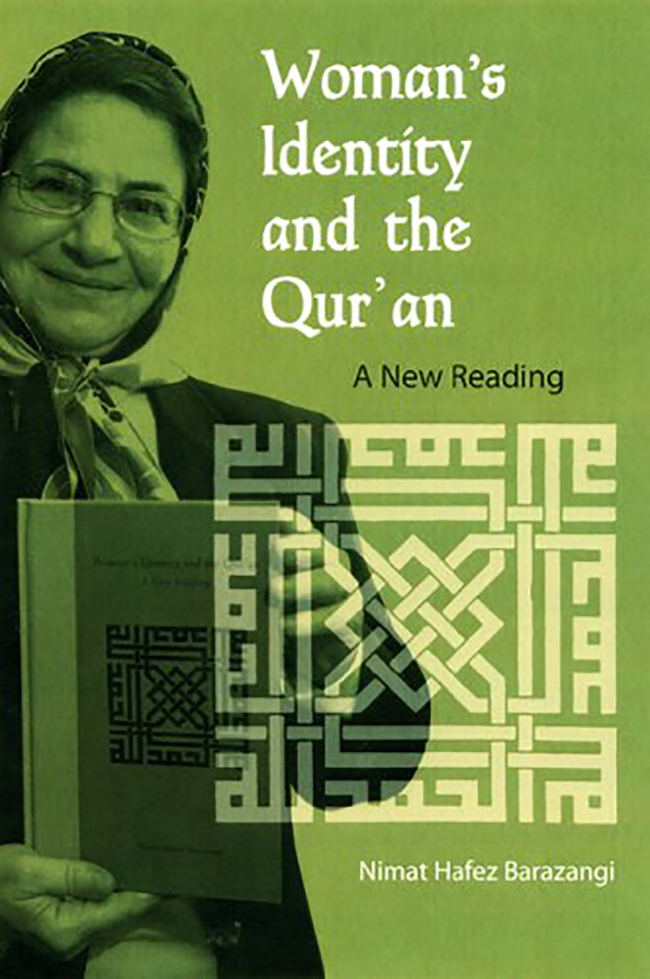
The interpretation of the Qur’an that results in veiling, is however the interpretation that has come to be the dominant one.
“The modern version of hijab (unlike folk forms of covering) has been the insistence of certain political and social movements within Islam for about two generations,” says Dr. Sherifa Zuhur, Director of the Institute of Middle Eastern, Islamic and Strategic Studies.
“Their numbers are not larger, but their voices louder, and so we see that in mainstream representations of Muslims, women are shown veiled, Muslim women may not be hired or selected for representative positions unless they are veiled - even though discrimination against veiling simultaneously exists,” Zuhur says.
In fashion, there is a growing world of Muslim designers, and cultural assumptions at play out there too.
“It would be wonderful if Muslim women were not consistently represented as being veiled in fashion. While there are quite some number of MENA-based [Middle East and North African] designers who cater to veiled women, there are also many interesting and original designers who don’t and yet avoid exact replications of current Western fashions,” says Zuhur.
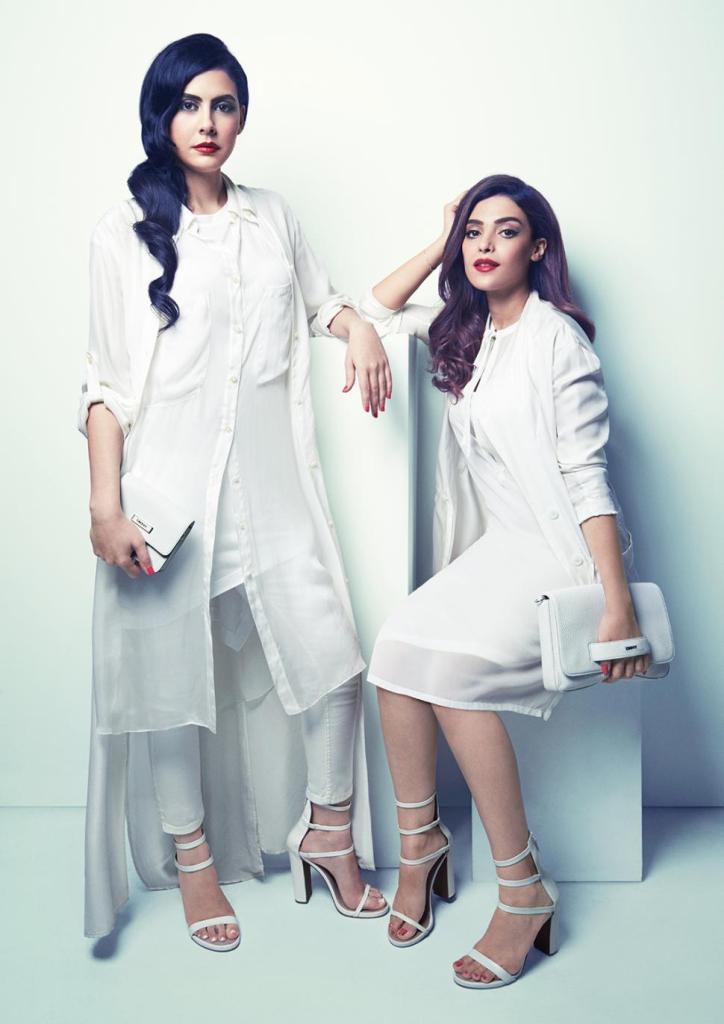
In mainstream fashion this was most recently exemplified by DKNY, who launched a special Ramadan Collection. The clothes are modest, the fabrics are flowy and the necklines are higher.
Sarah Hagi recently wrote an article called “Yes, I’m Hot in That.” As a Muslim woman born and raised in Canada, Hagi wears a hijab, for her a choice based upon religious reasons. “…for me the hijab represents a tenant of faith,” says Hagi. “Wearing a hijab outwardly shows people a sense of who I am as a person the same way any sort of specific style of dress does.”
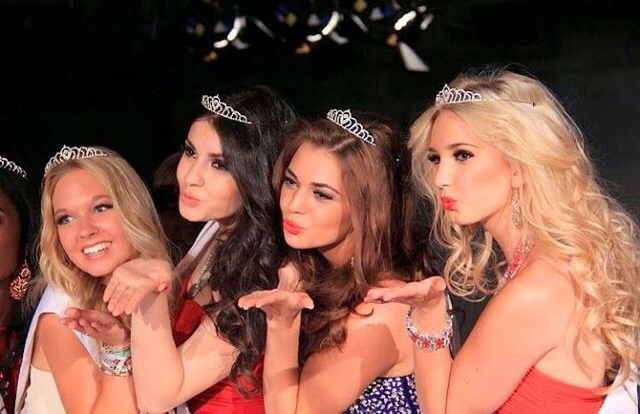
Hagi notes that her dress is constantly under scrutiny, and eliciting comments from others. But while some may assume that wearing a certain style of clothing represents choice, Hagi points out that it’s not so simple, and that perhaps we as women in the Western world are more locked into our choices than we may think.
“Clearly in the west I’m able to dress the way I do and my friends are able to dress the way they want to, but at the same time there are definitely expectations for women we haven’t chosen. There’s an illusion of choice in a way,” says Hagi.
“For example: I couldn’t get a job as a restaurant hostess because I won’t show cleavage or wear tight clothes, I’ve had a lot of friends work at restaurants who feel forced to sex up their image if they want to keep their job or get tips. To me, that shows women don’t really have a lot of choice when it comes to being in a desperate situation.”
Images from Sanjay Borra, Cindy, Femmes Fatales