

Having Strong Female Garment Worker Policy Brings Better Profit (and Productivity)
Today is International Women’s Day and women in the Western World will exchange high fives, knowing glances with eyes crinkled in the corners, and loving embraces. We will send emails to the women who mean most to us and maybe play that Helen Reddy song a couple of times in private. Hilary, Rosie, Patricia, and Phumzile’s pictures will grace our Instagram accounts and we will catch ourselves feeling like this could really be the year the gender pay gap closes or even that forms stop asking us to designate Ms., Miss., or Mrs. against a solitary Mr.
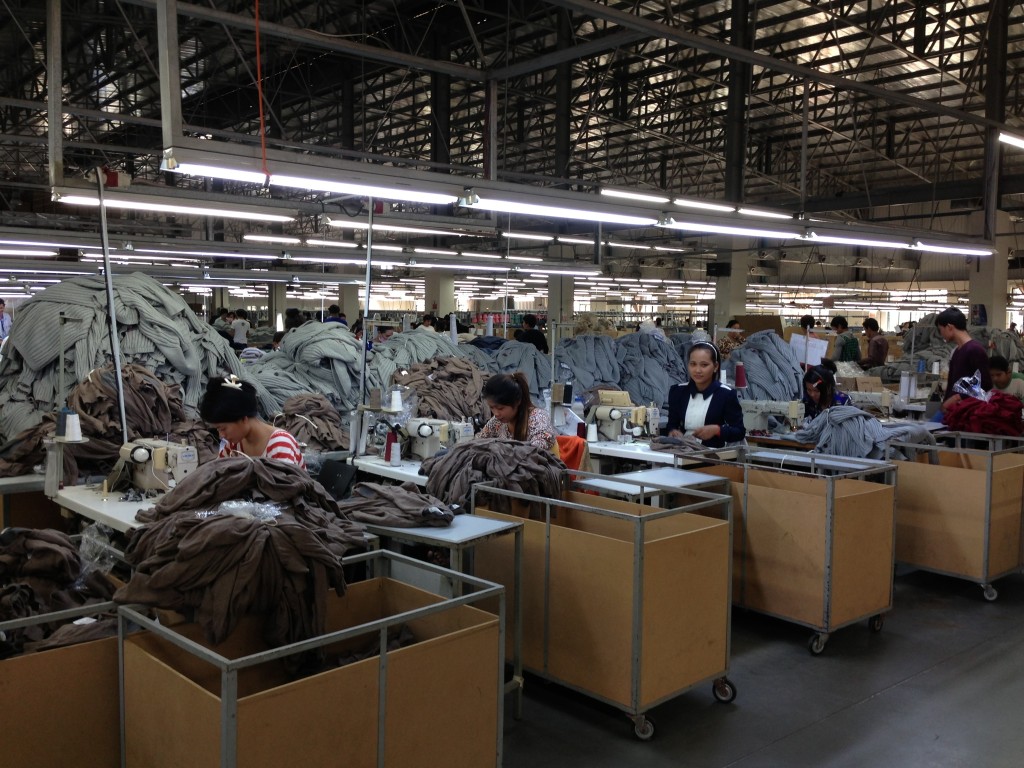
I’m pleased that whatever I choose to wear today will be a banner of women in industry, because most of the clothing produced in the world is made by women. I think we as consumers always sort of knew this, but we began to think of these women and their well-being at a greater propensity in the wake of the Rana Plaza factory collapse and the media’s coverage of the social reforms put in place since.
We are coming up on the two year anniversary of Rana Plaza’s collapse and in celebration of International Women’s Day, the International Labour Organization (ILO) put out some new data on the state of women in the garment industry in 2015.
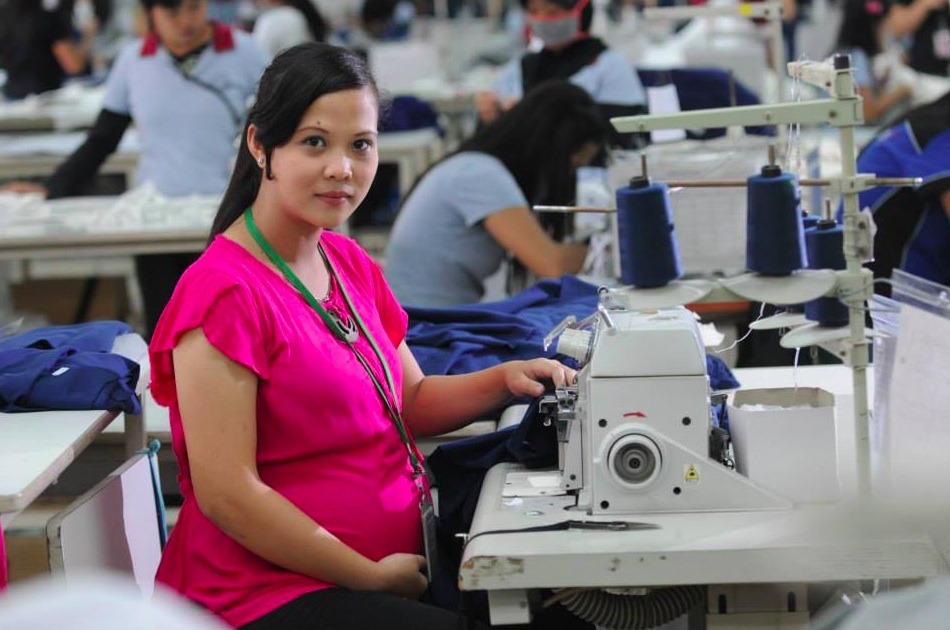
I’ll preface these results by saying that the data features garment factories in countries where the ILO operates a program called Better Work, namely: Cambodia, Indonesia, Vietnam, Jordan, Haiti, Nicaragua and Lesotho. These are important countries on which to focus as, 75 percent of all of the workers in these garment factories are female, ranging from 53 percent in Nicaragua to 81 percent in Vietnam. In general, the results show progress in some areas related to gender equality. Specifically, they show more maternity practices, allowances and safety procedures.
While providing female-friendly working policies is simply “the right thing to do,” it also makes good business sense in that crafting good work policies for women, many of whom are working mothers, makes them more invested in the companies they work for and less likely to leave and take their skills with them. Retaining a workforce and having workers who trust and care about the business increases productivity and reduces churn.
All this being said, the findings also caution that challenges remain in terms of sexual harassment, wage distinctions between male and female workers, discrimination and the quality of life that female garment workers experience compared with that of their male counterparts.
The ILO released this infographic that shows the major findings of the research:
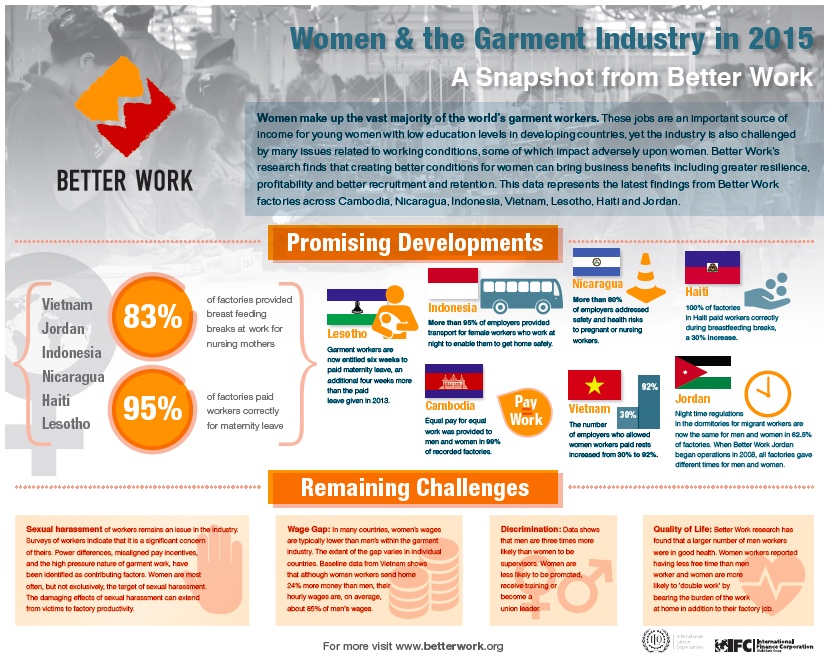
“The information that we have captured in this infographic shows many moves in the right direction such as making it easier for working mothers and reducing some inequalities, but there is a need for these changes to translate into better conditions for female garment workers on a grander scale,” says Arianna Rossi, Research and Policy Officer for Better Work.
“Our findings also demonstrate that where there is a commitment to workplace policies that are favourable to female workers, it can bring profitability and productivity so addressing existing inequalities also makes real business sense.”

One thought on “Having Strong Female Garment Worker Policy Brings Better Profit (and Productivity)”
Comments are closed.